
Electric cars are becoming an increasingly popular choice for buyers in India. With more manufacturers introducing EV models and charging infrastructure expanding across the country, buyers now have more options to consider.
But choosing an EV involves more than looking at its price or claimed range. Battery capacity, charging capability, driving requirements and access to charging stations are all important factors.
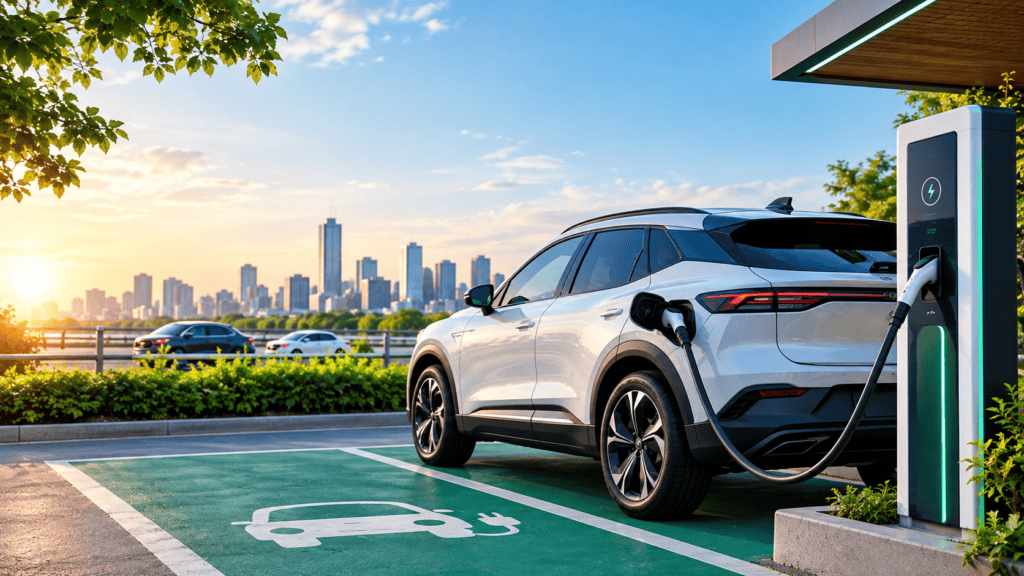
What Is an EV Car?
An electric vehicle, or EV, uses electricity stored in a rechargeable battery to power an electric motor.
Unlike petrol and diesel cars, battery-electric vehicles do not use a conventional internal-combustion engine for propulsion.
Key components include:
- Battery pack
- Electric motor
- Charging system
- Battery management system
- Charging port
Popular EV Cars in India
The Indian market includes electric hatchbacks, sedans and SUVs across different price segments.
Some of the models available in India include:
- Tata Punch EV
- Tata Nexon EV
- Tata Curvv EV
- Tata Harrier EV
- Mahindra BE 6
- Mahindra XEV 9S
- Maruti Suzuki e VITARA
- Hyundai CRETA Electric
New electric models and variants continue to enter the market, so specifications and availability can change over time.
Understanding EV Battery Capacity
EV battery capacity is measured in kilowatt-hours (kWh).
For example, an EV may have a:
- 30 kWh battery
- 40 kWh battery
- 50 kWh battery
- 60 kWh battery
- 75 kWh battery
A larger battery generally stores more energy, but battery size alone doesn’t determine driving range.
Range can also be affected by:
- Driving speed
- Traffic
- Vehicle weight
- Road conditions
- Air-conditioning
- Driving style
How Do EV Cars Charge?
EVs can generally be charged using AC charging or DC fast charging.
AC charging is commonly suitable for home and destination charging, particularly when the vehicle can remain connected for several hours.
DC fast charging can add energy more quickly and is useful during longer journeys.
Charging speed depends on the vehicle’s charging capability, charger power, battery condition and other factors.
What Should You Check Before Buying an EV?
Before choosing an electric car, consider:
Battery: Check battery capacity and available variants.
Range: Consider your normal daily driving rather than relying only on the advertised range.
Charging: Check AC/DC charging capability, charging time and connector type.
Home charging: Determine whether you can conveniently charge at home.
Public charging: Check charging options along your regular routes and for long-distance travel.
Warranty: Review the vehicle and battery warranty provided by the manufacturer.
Service: Consider service-center availability in your area.
EV Cars and Charging Stations
Your EV choice and charging requirements go together.
A vehicle with a larger battery may offer greater driving range, but convenient access to suitable charging stations remains important, especially for longer journeys.
EMITTER helps EV owners discover charging-station information across India, including charger types, connectors, charging power, pricing, operating hours and other available station details.
Explore EV Charging Stations on EMITTER →
Final Thoughts
EV cars offer Indian buyers more choices than ever before. When comparing models, look beyond the advertised range and consider battery capacity, charging capability, daily driving needs, charging access and ownership costs.
The best EV for your requirements depends on how and where you plan to use it.
Explore EV charging stations across India with EMITTER.